

Advanced Diagnostics Locate Faults in Drives
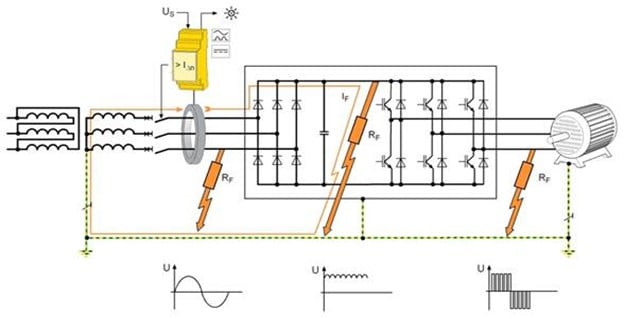
Over the past few decades, there has been a significant rise in the affordability and widespread usage of drives and other non-linear loads. This increased adoption, coupled with the age of older equipment, has led to a re-evaluation of traditional protection methods. As shown in the image below faults occurring through a simple drive can exhibit diverse waveforms depending on the fault location.
During commissioning, protective devices must be correctly configured to ensure they deliver the intended level of safety and system resilience. In some applications, specific system characteristics or operating conditions can result in protection devices responding more frequently than expected, requiring further analysis and optimisation of settings. Our technical and engineering team works closely with the customer during commissioning to investigate system behaviour, refine protection parameters, and ensure the solution provides reliable protection without compromising operational continuity.
The background
A major steel manufacturer in the United States required two new neutral grounding resistor (NGR) systems as part of an upgrade to its electrical distribution infrastructure. Having previously operated resistance-grounded systems, the customer understood the importance of maintaining system availability during a single fault event while ensuring personnel and equipment protection.
To meet these requirements, the manufacturer selected two Bender NGR systems incorporating advanced fault monitoring and protection capabilities. Our engineering team also provided commissioning support and technical training to assist with system integration, relay configuration, and ongoing operation. This collaborative approach helped ensure the grounding system was correctly implemented and aligned with the site's operational and safety objectives.
Following the installation of a new drive, the NGR system reported a series of ground-fault alarms. Analysis of the data recorded by the LINETRAXX® NGRM700 identified elevated DC current flowing through the neutral grounding resistor, indicating an abnormal operating condition.
Further investigation confirmed a fault within the drive's DC link circuit. The NGRM700 has the ability to detect and quantify DC fault currents enabled the issue to be identified quickly and accurately, supporting effective fault diagnosis. This capability is particularly valuable in installations incorporating modern power electronic equipment, where conventional ground-fault detection methods may not provide sufficient visibility of DC fault conditions.
The fault was subsequently verified through additional analysis, confirming the source of the alarm and allowing corrective action to be taken.
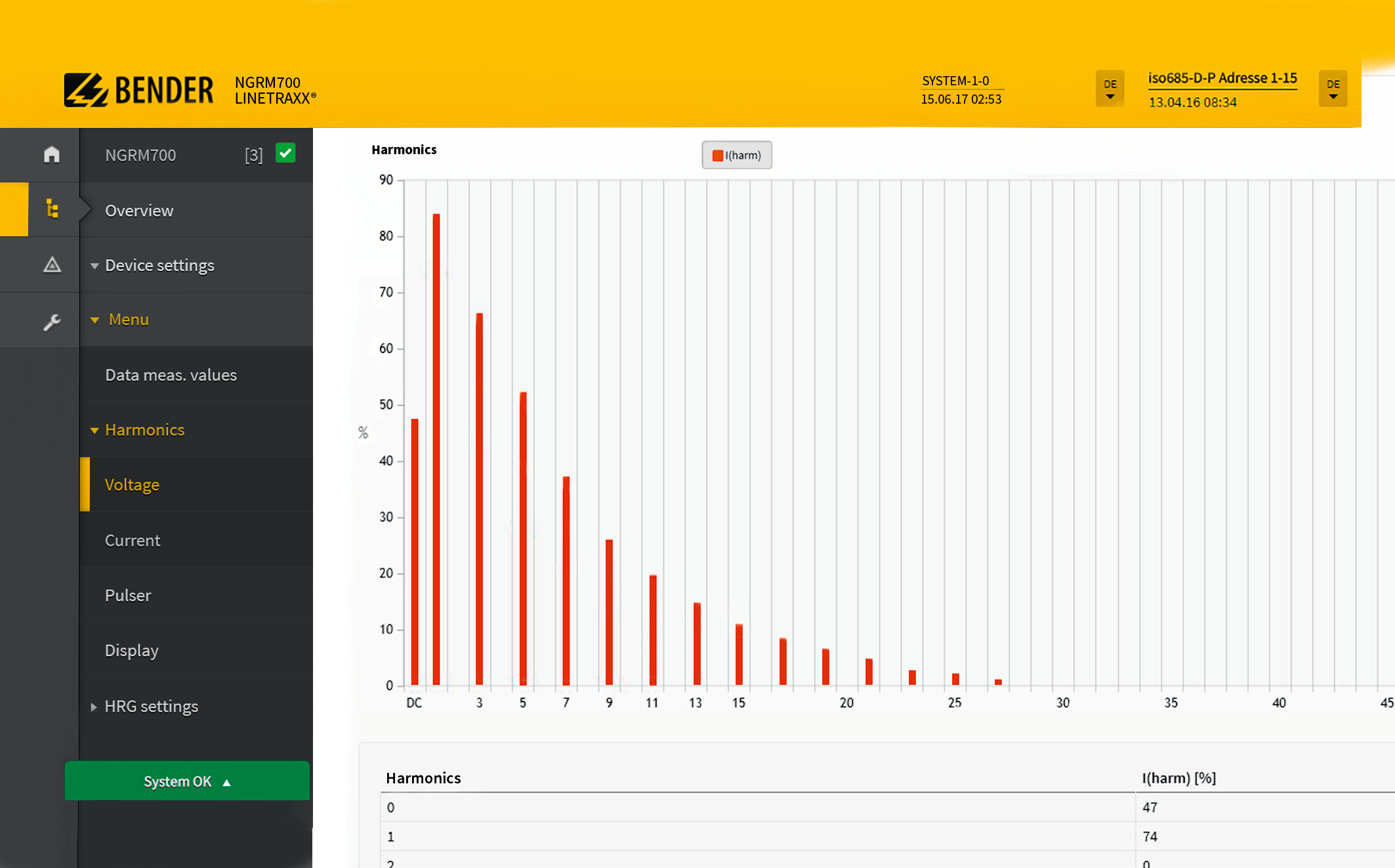
The NGRM700 identified a significant level of DC current flowing through the neutral grounding resistor, providing a clear indication of the ground fault condition. This capability enabled engineers to quickly diagnose the issue and trace it to the drive's DC link circuit.
Detecting DC fault currents can be particularly important in systems incorporating power electronic equipment, where fault characteristics may differ from those found in traditional electrical installations. By providing visibility of these fault conditions, the system supports faster fault investigation and corrective action.